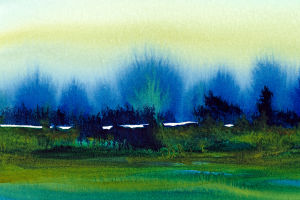
Impressionist seascapes are not created by copying every wave or cloud. Instead, they capture the feeling of changing light through carefully chosen colors, visible brushwork, and strong value relationships. Whether you paint from a real shoreline or a reference image, understanding these fundamentals will help your work look more convincing without unnecessary detail.
Instead of trying to reproduce every object exactly, focus on what the eye notices first: sunlight, reflections, movement, and atmosphere. When those elements work together, even a simple composition with one or two boats can feel lively and complete.
Build an Impressionist Composition
A successful painting begins with clear planning. Before mixing colors, establish a composition that guides the viewer naturally through the scene.
These practical techniques help you organize the painting before adding expressive brushwork.
Decide where the viewer should look first
Every composition needs one dominant focal point. In a seascape with small boats, choose one boat as the primary subject and allow the others to support the scene.
You can strengthen the focal point by giving it the highest contrast, the brightest highlights, or the sharpest edges. Avoid making every boat equally detailed, because the viewer's attention will become divided.
Simplify the scene into large shapes
Before painting details, divide the composition into four major areas: sky, distant horizon, water, and boats.
Painting these large shapes first makes it easier to judge overall balance. Small details such as ropes, reflections, or ripples should only appear after the main value structure is established.
Professional painters often spend more time adjusting these large shapes than painting individual objects.
Place the horizon with intention
A centered horizon often produces a static composition unless symmetry is the goal.
If the sky contains the most interesting color transitions, allow it to occupy more space. If water reflections become the main attraction, lowering the horizon creates more room for them.
Either choice should support the story of the painting rather than dividing the canvas into equal halves.
Control the direction of visual movement
The viewer's eye naturally follows strong lines.
Arrange boats, reflections, or shoreline elements so they gently guide attention toward the focal point instead of directing the eye outside the painting. Even subtle diagonal placement usually creates more movement than perfectly parallel arrangements.
Create Light, Color, and Atmosphere
Once the composition is established, concentrate on the qualities that define Impressionist painting: visible brushwork, fresh color relationships, and convincing light.
The goal is not photographic realism but an impression of natural light and movement.
Paint light before painting objects
Instead of thinking about boats first, think about the sunlight affecting everything in the scene.
Determine the light direction before applying paint. Surfaces facing the light should generally remain lighter, while shaded planes should shift toward darker values or cooler color mixtures.
The exact color of a boat is often less important than how light changes its appearance.
Separate value from color
Strong paintings depend more on value contrast than on bright pigments.
Even highly colorful seascapes should contain a clear range from light to dark. Squinting at your painting helps simplify values and reveals whether the focal point remains obvious.
If every area has similar brightness, increasing color saturation alone will not improve depth.
Use broken color instead of excessive blending
One characteristic of Impressionist painting is allowing separate brushstrokes of related colors to remain visible.
Instead of blending blue, turquoise, violet, and warm highlights into one perfectly smooth surface, place small strokes beside one another. Viewed from a distance, the eye naturally combines them into lively water and sky.
Overblending often removes the freshness that gives Impressionist paintings their energy.
Paint convincing water reflections
Reflections are usually darker and slightly softer than the objects above them.
Keep reflections vertically aligned with the boats instead of shifting them sideways. After establishing the reflected shapes, soften selected edges with a clean brush to suggest gentle movement on the water.
Avoid copying every detail from the boat into the reflection. Water simplifies forms naturally.
Vary brushstroke size
Using one brush size throughout the painting creates a mechanical appearance.
Apply broader strokes for the sky and distant water, medium strokes for the boats, and only a few smaller strokes for highlights or important structural details.
Changing brushstroke scale creates depth while preventing unnecessary complexity.
Know when to stop adding detail
Impressionist paintings rely on suggestion rather than complete description.
Step back regularly and examine the painting from several feet away. If the boats, sunlight, and atmosphere remain clear at that distance, additional details may not improve the image.
Some unfinished-looking passages are intentional. They allow the viewer's eye to complete the scene and preserve the spontaneous quality that defines the style.
Interpretation versus verified observation
Certain painting principles, such as using atmospheric perspective, simplifying distant objects, or aligning reflections beneath boats, are based on direct visual observation and can be tested by studying real seascapes.
Other decisions belong entirely to artistic interpretation. Choosing exaggerated turquoise water, violet shadows, or highly saturated skies does not claim those colors existed exactly as seen. Instead, those choices communicate a personal response to light and atmosphere. Understanding this distinction helps you balance accurate observation with creative expression.
By planning the composition, organizing values, using broken color, controlling reflections, varying brushwork, and distinguishing observed visual principles from personal artistic interpretation, you can create a painting that captures the atmosphere of sunlight on the sea while remaining fresh, confident, and visually engaging.