Let’s take a closer look at one of the most fascinating journeys in the wild. A tiger’s life is full of change, learning, and adaptation.
From the very first days as a small cub to becoming a powerful grown tiger and later a calm elder, every stage carries its own rhythm and meaning.
Today, we explore this life path together in a simple and vivid way, so we can better understand how these amazing animals grow and live in their natural world.
Early Days: A Small Beginning with Strong Care
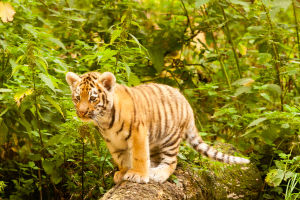
At birth, a tiger cub is extremely small and delicate. It cannot see clearly at first and depends fully on its mother for warmth, food, and protection. The mother plays the most important role during this stage, staying close and providing milk that helps the cub grow quickly.
In the early weeks, the cub spends most of its time resting and slowly building strength. Step by step, it begins to open its eyes, move more actively, and respond to sounds around it. This is also when the cub starts to recognize its mother’s movements and voice.
As weeks pass, the cub becomes more curious. It follows the mother carefully, observing how she moves through the environment. Every step is a lesson, from walking quietly to noticing distant sounds. This stage is all about learning through observation and gentle guidance.
Growing Stage: Learning Skills for Daily Life
As the young tiger grows stronger, it begins to explore further from its resting place. It plays with siblings when present, practicing movement and balance. These playful moments are more than just fun—they help build coordination and awareness.
During this stage, the mother continues to guide her young ones. She demonstrates how to recognize surroundings, find safe paths, and understand signals from nature. The young tiger slowly learns how to move quietly and stay alert.
This is also the time when curiosity becomes stronger. The young tiger starts to test its abilities, jumping, running, and reacting quickly to movement. Every experience helps shape its future survival skills.
Independent Phase: Facing the World Alone
Eventually, the young tiger reaches a stage where it must live independently. This transition is not sudden but gradual. It begins to spend more time alone, exploring larger areas and making decisions without constant guidance.
Living independently means learning how to find food sources, understand territory boundaries, and avoid potential risks from other large animals. It also means developing patience and timing when observing surroundings.
This phase is filled with both challenge and growth.
The tiger learns from trial and error, improving its instincts over time. It becomes more confident in movement, more aware of changes in its environment, and more skilled in adapting to different situations.
Mature Years: Strength and Balance in Life
When fully grown, the tiger reaches its most powerful stage. Its movements become smooth and controlled, and its awareness of the environment is highly developed. At this point, it is capable of managing its own space and maintaining a stable routine.
Mature tigers spend much of their time patrolling their area, resting, and observing their surroundings. They carefully adjust their activity based on weather, terrain, and available resources. This balance of energy and rest is essential for long-term well-being.
Interaction with other tigers may occur, especially during specific periods when communication and pairing become important for continuing the species. These interactions are usually brief but meaningful, based on natural timing and readiness.
Later Years: Calm Experience and Quiet Strength
As time passes, the tiger enters its later years. Physical strength may gradually reduce, but experience and awareness remain valuable. Older tigers often move more slowly and choose quieter spaces.
During this stage, they rely more on experience than speed. They understand their environment deeply and react with calm awareness. Even with reduced activity, they remain an important part of the natural balance.
Younger tigers may observe or learn indirectly from older individuals, gaining insight into long-term survival habits. In this way, knowledge continues to pass through generations in a natural cycle.
Closing: A Life That Teaches Us Balance
A tiger’s life is a continuous journey of growth, independence, and adaptation. Each stage builds on the one before it, creating a full cycle that reflects patience and resilience.
Lykkers, what part of this journey do you find most interesting—the playful early days, the learning phase, or the calm wisdom of later years? Feel free to reflect on it and share your thoughts. Understanding this life path helps us appreciate how carefully nature shapes every living being, step by step, in its own rhythm.