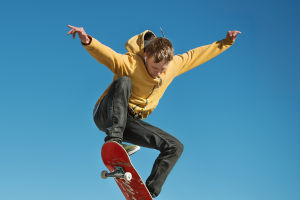
Skateboarding combines athleticism, creativity, and self-expression, making it one of the world's most popular action sports.
While falls and injuries are part of the learning process, most serious incidents can be prevented through proper preparation, protective equipment, and a structured approach to skill development.
Understanding how to progress safely allows riders to build confidence, improve performance, and reduce unnecessary risks.
Skills Build in a Clear Order
Successful skateboarding progression follows a logical sequence. Attempting advanced tricks before mastering the fundamentals often increases the likelihood of injury and slows long-term development.
Beginners should first focus on stance, balance, pushing, and stopping. Learning to stop safely is particularly important because it enables riders to control speed and respond effectively to unexpected obstacles. Techniques such as foot braking and controlled tail dragging should become second nature before moving on to more advanced skills.
Once basic control is established, riders can begin learning turning and carving. Gradual weight shifts and kickturns improve maneuverability and help develop board control. Flat-ground ollies are typically the next major milestone, serving as the foundation for many modern skateboarding tricks. Building a strong ollie technique creates the movement patterns necessary for more advanced maneuvers.
As skills improve, riders can progress to flip tricks, technical combinations, transition skating, and larger obstacles. Each stage introduces new challenges and requires an appropriate balance between skill level, practice, and risk management.
The Importance of Wearing a Helmet
Head injuries remain among the most serious risks in skateboarding. For this reason, a properly fitted helmet is the most important piece of protective equipment a rider can wear.
Helmets designed specifically for skateboarding provide protection for the types of impacts commonly experienced during falls. A properly fitted helmet should sit level on the head, with the front edge positioned just above the eyebrows. The straps should fit securely without excessive movement, and the helmet should remain stable when the rider moves their head.
Any helmet that experiences a significant impact should be replaced, as the protective materials inside may no longer provide the same level of protection after absorbing a major force.
Wrist Guards, Knee Pads, and Elbow Pads
Protective pads play a valuable role in reducing the severity of common skateboarding injuries.
Wrist injuries frequently occur when riders instinctively extend their hands during a fall. Wrist guards help distribute impact forces and reduce stress on vulnerable joints.
Knee pads protect one of the most common points of contact with the ground. They are particularly useful for beginners and riders practicing on ramps, bowls, and other transition features where falls can occur at higher speeds.
Elbow pads provide additional protection during falls and help reduce abrasions and impact injuries. For riders who are still developing confidence and consistency, wearing wrist guards, knee pads, and elbow pads together offers the most comprehensive protection.
Learning How to Fall Safely
Falling is an unavoidable part of skateboarding, but learning how to fall correctly can significantly reduce the risk of injury.
Rather than attempting to stop a fall with rigid, straight arms, riders should focus on lowering their center of gravity as balance is lost. Staying relaxed, bending the body naturally, and allowing momentum to disperse through a controlled roll can reduce the force placed on individual joints.
Practicing controlled falls on softer surfaces while wearing protective equipment helps develop safe reactions that become automatic during real-world situations.
Choosing a Safe Environment
The riding environment has a major influence on safety. Uneven pavement, loose gravel, wet surfaces, and hidden obstacles can increase the likelihood of unexpected falls.
Before each session, riders should inspect both their surroundings and their equipment. Checking the deck, trucks, wheels, and bearings helps identify potential issues before they become safety hazards.
For beginners, skate parks often provide the safest environment for progression. Designed riding areas offer more predictable surfaces, fewer external hazards, and opportunities to practice skills in a controlled setting. As experience grows, riders can gradually explore more challenging terrain while maintaining a strong focus on safety.
Skateboarding is most enjoyable when progression is built on strong fundamentals, proper protective equipment, and responsible decision-making. Riders who develop skills gradually, wear appropriate safety gear, and choose suitable practice environments can significantly reduce injury risks while improving their performance. A thoughtful approach to learning not only promotes safety but also supports long-term success and enjoyment in the sport.