Look up at the night sky, and you'll see a vast canvas of twinkling stars.
For thousands of years, humans have connected these dots to form constellations—patterns with rich stories, legends, and, for some, deeper meanings about fate and destiny.
But while the stars have always inspired awe, the way we interpret them has sparked a long-standing debate: is astrology a science or a cultural belief?
In this article, we explore the intersection between the science of astronomy and the cultural practice of astrology. Both have shaped our understanding of the stars, but one is rooted in empirical observation, while the other is steeped in mysticism. Let's take a closer look at the fascinating clash between science and culture that revolves around the stars.
1. What Are Constellations?
Constellations are groups of stars that, when viewed from Earth, appear to form recognizable patterns. Many cultures have given these patterns names, often based on mythological figures, animals, or objects. The idea of grouping stars into constellations is ancient, with roots going back thousands of years.
Example: The Big Dipper, part of the Ursa Major constellation, is one of the most recognizable patterns in the night sky. The stars in this pattern have been used for navigation and timekeeping across different cultures.
While astronomers use constellations as a way to map the sky, they are just patterns. The stars within a constellation may be light-years apart from one another, and the groupings are not physically connected in space. This scientific view contrasts with the symbolic interpretations offered by astrology.
2. The Scientific View: Astronomy
Astronomy is the scientific study of celestial bodies, including stars, planets, and galaxies. Unlike astrology, which links celestial movements to human affairs, astronomy is grounded in observation, measurement, and mathematical analysis.
Astronomers study the composition, behavior, and motion of celestial objects. Using telescopes and other advanced technologies, they gather data that allows them to understand the universe's vastness and the processes that govern it. The study of stars, including how they are born, live, and die, is central to astronomy.
Example: The Hubble Space Telescope has allowed scientists to observe star formation in distant galaxies, helping astronomers understand how stars evolve and how galaxies themselves change over time.
Astronomy is concerned with objective facts and scientific methods, focused on understanding the physical universe rather than interpreting its meaning.
3. Astrology: The Influence of the Stars
Astrology, on the other hand, suggests that the positions of stars and planets at the time of a person's birth influence their personality, behavior, and even their fate. This belief system goes back thousands of years, with roots in Babylonian, Greek, and Egyptian cultures. It links the movements of celestial bodies with events on Earth, including personal life events, relationships, and career paths.
In astrology, each zodiac sign is associated with certain traits and tendencies. People born under different signs—like Aries, Taurus, or Pisces—are believed to have distinct personalities and life experiences that reflect their starry influences.
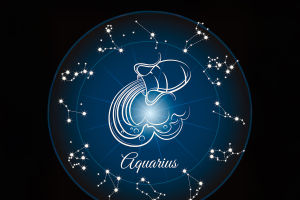
Example: If you're an Aquarius, you might be seen as innovative and eccentric, while a Capricorn may be considered disciplined and ambitious. These personality traits are linked to the position of the sun when you were born.
While astrology is not considered a science by the scientific community (due to its lack of empirical evidence), it continues to play a significant role in cultural practices and personal belief systems around the world.
4. The Clash: Science and Belief
The clash between astronomy and astrology often centers around one key issue: evidence. Science relies on testable, repeatable evidence. Astronomical phenomena can be measured, predicted, and observed. In contrast, astrology doesn't offer the same empirical data; its claims are often based on tradition, belief, and subjective interpretation.
Many scientists argue that astrology's lack of scientific foundation makes it unreliable as a tool for understanding human behavior or predicting future events. Research has consistently shown that astrological predictions do not outperform chance, and the positions of stars and planets have no direct influence on individual lives.
However, astrology continues to thrive in popular culture. For many, it offers a sense of meaning or guidance, a way to connect with the mysteries of the universe. Horoscopes, astrological charts, and zodiac signs are widely read, and many people feel personally connected to the traits associated with their signs.
Example: Despite being criticized by scientists, astrology remains a global phenomenon, with millions of people reading their daily horoscopes or consulting astrologers for advice.
5. Where Science and Culture Meet
Even though science and astrology may not see eye to eye, they both reflect humanity's desire to understand the universe. Astronomy is the pursuit of knowledge, uncovering the mechanics of the cosmos. Astrology, on the other hand, is a cultural expression that seeks to find meaning and connection in the stars.
While astronomy continues to push the boundaries of our understanding, astrology endures as a cultural practice, offering personal insights and connecting people to something larger than themselves. In many ways, the two are complementary: astronomy answers the “how” of the universe, while astrology addresses the “why” of human existence.
Example: You might find yourself in a moment of personal reflection after reading your horoscope, yet still marvel at the breathtaking images of distant stars from the Hubble Telescope.
Reflecting on the Stars
At the end of the day, whether you believe in the influence of the stars or not, both science and astrology offer ways to connect with the cosmos. Astronomy invites us to explore the physical universe, while astrology offers a more personal, symbolic perspective. Both contribute to our fascination with the stars and our ongoing quest to understand our place in the vast universe.
So, next time you look up at the sky, remember that the stars may have different meanings depending on how you choose to view them—whether as distant suns or as guides to your own journey.